|
ĐỀ VIP ÔN TẬP TIẾNG ANH KHỞI ĐỘNG - MỤC TIÊU 9+ ĐỀ 1 – MK 1 (Đề thi có … trang) |
KỲ THI TỐT NGHIỆP TRUNG HỌC PHỔ THÔNG 2026 Môn thi: TIẾNG ANH Thời gian làm bài: … phút, không kể thời gian phát đề. |
- Tải file word kèm ma trận và lời giải chi tiết ( 20k/Đề ) - Liên Hệ Zalo 0915347068
- Tải file word kèm ma trận và lời giải chi tiết ( 100k/50Đề ) - Liên Hệ Zalo 0915347068
Read the following advertisement and mark the letter A, B, C or D on your answer sheet to indicate the option that best fits each of the numbered blanks from 1 to 6.
MINDCARE FOR YOUTH—Your Mental Wellness Companion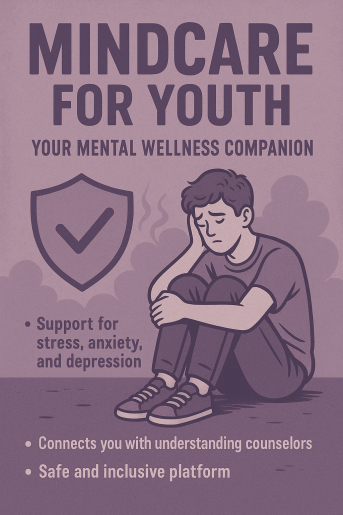
- A (1)_________ of young people nowadays tend to (2)_________ substances as a way to escape from stress, anxiety, and the challenges that come with depression. In 2025, mental well-being has become more significant, demanding, and vital than ever before for teenagers facing complex emotional difficulties.
- MindCare for Youth helps you (3)_________ professional support, moving beyond the stigma and harmful norms that often discourage young people from seeking mental health resources. Our platform connects you with counselors (4)_________ understand the specific struggles that LGBTQIA+ youth, boys, and marginalized communities face every day.
- Our youth-centered approach, (5)_________ real voices from the Youth Advocacy Coalition, ensures that solutions are built specifically for you. We uphold the highest standards of data protection and (6)_________ practice, establishing a safe haven where your privacy is always protected.
https://jedfoundation.org/mk
Question 1:A. number B. much C. any D. each
Question 2:A. mishandle B. misapply C. misemploy D. misuse
Question 3:A. look out for B. hunt about for
C. reach out for D. search around for
Question 4:A. which B. who C. whom D. whose
Question 5:A. incorporating B. was incorporated
C. had incorporated D. which incorporat
Question 6:A. ethically B. ethics C. ethicize D. ethical
Read of the following leaflet and mark the letter A, B, C or D on your answer sheet to indicate the option that best fits each of the numbered blanks from 7 to 12.
BREAK FREE FROM "GRIND CULTURE"—Your Path to Balance & Wellness
- Today's teens are under enormous stress, facing constant achievement expectations; (7)_________, it's never too late to take control of your mental health. Don't get caught (8)_________ the rat race—most teens struggle with constant comparisons and performance pressures that drain their mental energy and self-worth.
- Sleep quality, outdoor exercise, and (9)_________ are strongly linked to reduced burnout and improved mental health. Some teens find relief through social media connections, while (10)_________ discover their strength in nature and face-to-face friendships.
- To (11)_________ off burnout effectively, prioritize (12)_________ time where you do nothing productive. Adults must take steps to validate hobbies that aren't connected to achievement or college success.
- Start your wellness journey TODAY.
https://www.harvardmagazine.com/mk
Question 7:A. nevertheless B. however C. therefore D. moreover
Question 8:A. in B. about C. to D. at
Question 9:A. self-care practices creative B. creative practices self-care
C. creative self-care practices D. practices self-care creative
Question 10:A. others B. the others C. another D. other
Question 11:A. fend B. stave C. hold D. ward
Question 12:A. unplanned B. unscheduled C. spontaneous D. impromptu
Mark the letter A, B, C or D on your answer sheet to indicate the best arrangement of utterances or sentences to make a meaningful exchange or text in each of the following questions from 13 to 17.
Question 13:
- Maya: From Blue Zones! People there eat good food, and they live to 100 years old. I want to be like them!
- Maya: Hi John! I eat vegetables every day. I want to live long and healthy.
- John: Wow! Really? Where did you learn this?
A. b-c-a B. a-b-c C. b-a-c D. c-b-a
Question 14:
- Sophie: If we buy better products now, we can help the planet because our children will live here tomorrow.
- Sophie: That is wonderful, and I believe that when more people think like you, we can all shop with our hearts and help the world together.
- Sophie (Gen Z): I buy things because they are good for the Earth, and I check the brand before I spend money.
- Tom: You are right, and I understand your values better now because your generation teaches me to think about the future.
- Tom (Gen X): When I was young, I only bought things because they were cheap, and I did not think about the environment.
A. c-a-d-b-e B. e-d-c-b-a C. c-e-a-d-b D. a-b-d-e-c
Question 15:
Dear Maria,
- Although I was worried before, I believe this new way works because families help each other.
- When I think about our city, I feel happy because people work together now.
- If we own buildings together, we can make our neighborhood better because everyone has a voice.
- I hope that you will visit soon because I want to show you how our community has changed.
- When more people join our group, we become stronger because we share ideas and money together.
Your friend,
LK
A. d-e-a-b-c B. b-c-a-e-d C. e-b-c-a-d D. a-e-b-c-d
Question 16:
- If old people have a job, they feel important, and they love their life more each day.
- When we work with purpose, our body becomes stronger, and our mind feels better, so retirement age should not stop us from doing good things.
- Although some people think work is hard, older workers feel young and strong because they help others and they feel useful.
- When people work after retirement, they stay healthy and happy because their minds are active.
- Because purposeful work gives meaning, people live longer, and they have fewer health problems than those who do nothing.
A. e-a-c-d-b B. a-c-d-e-b C. c-d-e-a-b D. d-a-e-c-b
Question 17:
- When architects think about poor families, they design small houses that cost less money and use less land.
- Because good design saves space, families can live in smaller homes, but they still feel comfortable and happy together.
- If we build homes with simple materials, more people can buy houses, and they do not need to pay too much money.
- When cities use these new ideas, everyone can have a home, and no one needs to live on the street, so architects can solve the housing problem.
- Although big houses look nice, small and smart homes help more people because they are cheap and easy to build.
A. a-c-b-e-d B. a-b-d-c-e C. a-e-b-c-d D. a-d-e-b-c
ĐỀ VIP 1 - KĐ - MỤC TIÊU 9+ TN THPT MÔN TIẾNG ANH 2026 - MK1
ĐỀ VIP 2 - KĐ - MỤC TIÊU 9+ TN THPT MÔN TIẾNG ANH 2026 - MK2
ĐỀ VIP 3 -KĐ - MỤC TIÊU 9+ TN THPT MÔN TIẾNG ANH 2026 - MK3
ĐỀ VIP 4 - KĐ - MỤC TIÊU 9+ TN THPT MÔN TIẾNG ANH 2026 - MK4
ĐỀ VIP 5 - KĐ - MỤC TIÊU 9+ TN THPT MÔN TIẾNG ANH 2026 - MK5
ĐỀ VIP 6 - KĐ - MỤC TIÊU 9+ TN THPT MÔN TIẾNG ANH 2026 - K1
ĐỀ VIP 7 - KĐ - MỤC TIÊU 9+ TN THPT MÔN TIẾNG ANH 2026 - K2
ĐỀ VIP 8 - KĐ - MỤC TIÊU 9+ TN THPT MÔN TIẾNG ANH 2026 - K3
ĐỀ VIP 9 - KĐ - MỤC TIÊU 9+ TN THPT MÔN TIẾNG ANH 2026 - K4
Read the following passage about Social Media's Impact on Teen Mental Health in the United States and mark the letter A, B, C or D on your answer sheet to indicate the option that best fits each of the numbered blanks from 18 to 22.
Social media's effect on teenagers' mental health continues to spark widespread concern throughout the United States. (18)_________, harmful consequences could be reduced significantly. Research data demonstrates that while 48% of adolescents believe social media negatively affects their age group, only 14% think it damages their personal well-being, revealing a noteworthy contradiction. Many young individuals spend excessive time on platforms, yet most still appreciate the genuine connections that they develop through these digital communities. The finding that 74% of teens report feeling emotionally connected to friends through social media, (19)_________. Girls experience both stronger positive and stronger negative effects than boys, reporting greater satisfaction alongside deeper struggles with self-esteem and comparison. Additionally, 34% of teenagers access mental health information from these platforms, (20)_________. Black teens particularly benefit from supportive communities online. However, the communication gap persists: while 80% of parents feel comfortable discussing mental health, only 52% of teens reciprocate this comfort level. Sleep disruption represents another concern; (21)_________. The article reveals that despite its damaging aspects, including bullying and social pressure, social media remains psychologically important; (22)_________. Understanding this complicated relationship is crucial for supporting adolescents today.
https://www.pewresearch.org/mk
Question 18:
A. Parents and teens whose communicate more openly regarding this situation
B. If parents and teens were to communicate more openly about this issue
C. Having opened discussion parents and teens more openly about this issue
D. When parents and teenagers which are communicating openly about this issue
Question 19:
A. what persistently crucial towards users, demonstrates its relevance throughout modern teenage populations
B. that increasingly vital to them, shows its prominence in current generation communities
C. something increasingly valuable to them, highlights its significance in modern youth culture
D. whether increasingly essential for them, reveals its centrality within contemporary social circles
Question 20:
A. whom communities relies upon several outlets regarding interaction plus social maturation
B. teenagers will be using various channels for interactions throughout adolescent maturation
C. users had maintained significant platforms throughout communication alongside psychological expression
D. which they consider an important resource for guidance and personal development
Question 21:
A. digital devices preventing sufficient nightly recovery among young people increasingly becoming serious
B. teenagers experiencing fatigue likely stems from internet platform engagement hours
C. around 45% of adolescents report reduced sleep due to social media usage
D. internet consumption teenagers frequently disrupts their nightly rest patterns significantly now
Question 22:
A. therefore, young people continue depending on these platforms for connection and self-expression
B. consequently, teenagers maintains relying to social media but expressing personal identity growth
C. hence, users remain attached toward virtual communities which they finding meaningful interactions together
D. thus, adolescents keeping using digital networks since bonding needs plus identity development required
Read the following passage about Understanding Teen Mental Health and Social Media and mark the letter A, B, C or D on your answer sheet to indicate the best answer to each of the following questions from 23 to 30.
Social media has become a popular target for blaming rising mental health problems among teenagers. However, experts like Professor Andrew Przybylski argue that this discussion oversimplifies the issue. Recent studies from Oxford and Cambridge reveal important differences in how young people use these platforms. Rather than assuming technology causes poor mental health, we should examine actual behavior patterns. Teenagers with diagnosed mental conditions experience social media differently from their peers, which presents crucial information that public debates frequently ignore.
The research distinguishes between two important groups of adolescents. First, teenagers with internalizing conditions such as anxiety and depression report experiencing more social comparison when browsing online platforms. They tend to spend considerable time on social media and feel dissatisfied with their digital friendships. Second, teenagers with externalizing conditions, including ADHD, demonstrate different behavior. These young people spend more time online but do not exhibit the same tendency toward comparing themselves to others.
Przybylski emphasizes that online behavior should be understood as a symptom rather than necessarily a cause of mental health difficulties. This perspective guides researchers toward better questions and provides a deeper understanding of adolescent experiences. He advocates for examining how teenagers actually utilize technology instead of pursuing simple solutions like banning platforms entirely. Such an approach recognizes that technology itself is not inherently harmful.
Future research must include young people with clinical diagnoses and focus on their lived experiences. Data-driven studies centered on adolescent perspectives can produce more effective policies and appropriate platform regulations. By understanding where teenagers truly exist rather than making assumptions, society can develop genuinely helpful solutions. This nuanced approach transforms our conversation about teen mental health from blame to understanding.
https://www.ox.ac.uk/mk
Question 23: Which of the following is NOT MENTIONED in the passage?
A. Teenagers with anxiety and depression experience more social comparison on social media.
B. Professor Przybylski argues that online behavior is a symptom rather than a cause of mental health problems.
C. Research from Oxford and Cambridge examines how different groups of adolescents use technology differently.
D. Specific screen time limits that parents and platforms should enforce for teenagers.
Question 24: The word “their” in paragraph 1 refers to _________.
A. social media platforms
B. teenagers with diagnosed mental conditions
C. public debates
D. all adolescents in general
Question 25: The word “externalizing” in paragraph 2 is OPPOSITE in meaning to _________.