|
ĐỀ VIP ÔN TẬP TIẾNG ANH KHỞI ĐỘNG - MỤC TIÊU 9+ ĐỀ 5 – MK5 (Đề thi có … trang) |
KỲ THI TỐT NGHIỆP TRUNG HỌC PHỔ THÔNG 2026 Môn thi: TIẾNG ANH Thời gian làm bài: … phút, không kể thời gian phát đề. |
- Tải file word kèm ma trận và lời giải chi tiết ( 20k/Đề ) - Liên Hệ Zalo 0915347068
- Tải file word kèm ma trận và lời giải chi tiết ( 100k/50Đề ) - Liên Hệ Zalo 0915347068
Read the following advertisement and mark the letter A, B, C or D on your answer sheet to indicate the option that best fits each of the numbered blanks from 1 to 6.
Stop Checking Your Phone Too Much!
⮚ Many young people spend a lot of time on social media every day, and this can affect their (1)_________ and happiness. Our app helps you reduce screen time by giving you useful tips, reminders, and support that keep you (2)_________ real life.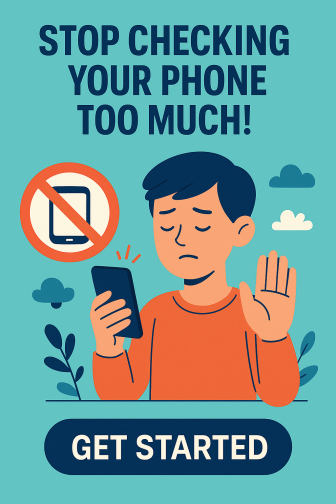
⮚ The app, (3)_________ is easy to use and designed by experts, helps you build better habits and feel better each day. Social media websites use a (4)_________ of tricks to keep you online longer, such as notifications and personalized content.
⮚ Scientists say that too much screen time can tire your (5)_________ cortex and make it hard to concentrate for long periods. By using MindFlow, you can cut down on bad phone habits and dangerous addictions (6)_________ your mental health and relationships.
❖ Download MindFlow now and start living better!
https://med.stanford.edu/mk
Question 1:A. healthy B. healthful C. healthily D. health
Question 2:A. focused on B. involved in C. interested in D. connected to
Question 3:A. whom B. who C. which D. whose
Question 4:A. lot B. number C. some D. each
Question 5:A. prefrontal B. temporal C. sensory D. visual
Question 6:A. affecting B. which affected C. had affected D. was affected
Read of the following leaflet and mark the letter A, B, C or D on your answer sheet to indicate the option that best fits each of the numbered blanks from 7 to 12.
STOP DOOMSCROLLING—PROTECT YOUR HEALTH!
What is doomscrolling?
⮚ "Doomscrolling" means scrolling through bad news online for a long time. (7)_________ it is common today, this habit is bad for your health.
❖ Why is it bad?
⮚ Spending too much time on social media causes digital (8)_________. This makes you feel stressed and worried. Because of constant bad news, you cannot sleep well at night.
⮚ Many people have compulsive (9)_________ habits—they look at their phones every few minutes. (10)_________ problem is that your brain cannot rest. Some people feel anxious, while others feel very tired.
❖ Health Problems
✔ Stress and anxiety become worse
✔ Sleep is broken and not good
✔ Emotions become weak and tired
✔ (11)_________ affects your mind
❖ What You Can Do
✔ Stop scrolling before bed
✔ Turn off phone notifications
✔ Choose better information sources
✔ Spend time with family and friends
✔ Go for walks outside
❖ Remember
⮚ It all comes down (12)_________ protecting your health now—this will help you feel better. Stop doomscrolling today and enjoy life more!
❖ Your health is important. Take care of yourself!
https://www.health.harvard.edu/mk
Question 7:A. In spite of B. However C. Although D. Unless
Question 8:A. fatigue B. addiction C. burnout D. overload
Question 9:A. scrolling B. checking C. touching D. using
Question 10:A. Other B. The others C. Another D. Others
Question 11:A. Negative news information B. News information negative
C. Information negative news D. Negative information news
Question 12:A. with B. for C. at D. to
Mark the letter A, B, C or D on your answer sheet to indicate the best arrangement of utterances or sentences to make a meaningful exchange or text in each of the following questions from 13 to 17.
Question 13:
a. Mr. Tom: Yes, but I like the local market! Here, I know the farmers. I help them, and they help my family. We are a good community!
b. Sarah: Oh, I understand now! Local shops help everyone. I want to come with you next time!
c. Sarah: Hello, Mr. Tom! Why do you always shop at the local market? The big supermarket is cheaper.
A. b-c-a B. c-a-b C. c-b-a D. a-b-c
Question 14:
a. Student: Now I know that space is important, and I will study at the library every day because my room is too noisy and small for learning.
b. Student: When I go to the library, I feel happy, and I can focus on my books, because the place is clean and peaceful.
c. Student: Teacher, I study in my bedroom, but I cannot remember my lessons because it is not quiet.
d. Teacher: You are right, and if you study in a good space with light and quiet, your brain works better, so you will remember everything easily.
e. Teacher: I understand your problem, and I think a good study space helps you learn better, so you should find a quiet place to study.
A. c-d-a-e-b B. e-a-d-c-b C. c-e-b-d-a D. d-c-e-b-a
Question 15:
Dear Mai,
a. When I came to your beautiful traditional village for ecotourism, I saw that local people earned good money and felt happy.
b. Although big hotels take money away, ecotourism helps small local shops and families earn more income together.
c. If more people choose ecotourism, your community will grow much stronger, and your children can stay happily in the peaceful village.
d. Because many foreign tourists visit your natural places, your family can sell fresh food and keep your home very comfortable.
e. Since you protect the forest areas carefully now, many animals stay safe, and more tourists will definitely come to see them.
I love your village!
Your friend,
LK
A. a-d-c-b-e B. d-a-e-c-b C. c-d-b-a-e D. b-c-a-d-e
Question 16:
a. If students review their lessons after one day, then after one week, and finally after one month, their memory becomes much stronger because repetition creates permanent neural connections in the brain.
b. Modern education strategies combine frequent practice, meaningful exercises, and interactive learning, so students can fight the forgetting curve and remember important information for a long time successfully.
c. When students learn new information, they forget it quickly because the brain cannot keep everything permanently in memory without revision and regular practice.
d. Although many students study hard before exams, they forget information quickly because they do not use active recall or connect new knowledge with previous learning experiences regularly.
e. The forgetting curve is a psychological theory that explains how we lose information over time, so teachers now use spaced repetition and multiple reviews to help students retain knowledge effectively.
A. a-d-c-e-b B. d-e-c-a-b C. c-e-a-d-b D. a-d-e-c-b
Question 17:
a. If parents take children to national parks, kids develop curiosity about animals and plants, so they become enthusiastic about nature protection.
b. Ecotourism teaches young people environmental conservation, and it helps them understand why protecting nature is truly important.
c. Although technology attracts young people's attention, ecotourism offers unforgettable experiences that connect children with nature and create emotional bonds.
d. When families do ecotourism activities, children learn to love nature because they experience wildlife directly instead of just reading about it.
e. Since families spend time in natural environments, children gain physical exercise and mental health, so they develop responsibility for nature.
A. d-a-c-b-e B. d-e-b-c-a C. d-c-e-a-b D. d-b-a-c-e
Read the following passage about GLP-1 Therapies: A Global Health Initiative and mark the letter A, B, C or D on your answer sheet to indicate the option that best fits each of the numbered blanks from 18 to 22.
The World Health Organization has recently recommended GLP-1 therapies for obesity treatment in many countries around the world. These medicines, which include semaglutide and tirzepatide, (18)_________. If governments had taken decisive action earlier on obesity prevention programs, the expected cost of three trillion dollars per year by 2030 would have been avoided completely. Obesity is now recognized as a chronic disease requiring professional medical supervision, not just a lifestyle problem or personal choice.
(19)_________. The fact that fewer than ten percent of people who need these medicines will have them by 2030 shows serious and ongoing problems throughout the healthcare system. (20)_________. Most developing countries and poor communities cannot afford these expensive treatments for their citizens at all.
The WHO warns about serious manufacturing challenges and bottlenecks; furthermore, health systems in poor countries face many severe difficulties and resource shortages. These systemic factors prevent more people from receiving GLP-1 therapies effectively. Some GLP-1 drugs have been successfully added to the essential medicines list for diabetes treatment, (21)_________. The organization plans to work cooperatively with governments and international partners from 2026 onwards to improve access and lower prices significantly.
If countries invest in better production facilities and comprehensive support programs, more people could benefit from these important treatments. (22)_________, private businesses, and health organizations worldwide. Without immediate action and commitment, obesity will continue to cost the world billions of dollars annually and cause serious health problems for millions of vulnerable people everywhere.
https://www.reuters.com/tc
Question 18:
A. have been used to manage chronic diseases in people with obesity-related issues
B. serve for extended treatment among obese adults having significant metabolic conditions
C. are used for long-term care in adults with obesity and related health conditions
D. are provided during long-term management of patients with obesity complications
Question 19:
A. Still, procurement for particular medicines becomes substantially constrained but difficult everywhere
B. Nevertheless, availability of treatment options proves severely restricted yet problematic worldwide
C. However, access to these drugs remains very limited and challenging globally
D. Yet, obtaining pharmaceutical therapy stays quite restricted or problematic internationally
Question 20:
A. High costs and limited production capacity are the main barriers preventing wider distribution
B. Limited funding and weak capacity is the primary obstacle preventing much wider market accessibility
C. Production issues but financial constraints remain the main challenge limiting broader market distribution
D. Expensive output yet insufficient capacity are the key barrier preventing broader distribution
Question 21:
A. which is a positive and encouraging step forward for patients globally
B. where exists a favorable and uplifting initiative ahead for recipients globally
C. were beneficial and inspiring moves ahead to individuals worldwide
D. have been a favorable and uplifting development onward toward recipients around the world
Question 22:
A. What the solution requires is close cooperation between governments
B. How the plan demands is thorough collaboration among agencies
C. Whether the strategy needs is unified partnership among institutions
D. Where the initiative involves is broad coordination between organizations
Read the following passage about THE IMPACT OF SOCIAL MEDIA FILTERS ON BEAUTY STANDARDS and mark the letter A, B, C or D on your answer sheet to indicate the best answer to each of the following questions from 23 to 30.
Social media filters have changed how young people see themselves. Apps like "Bold Glamour" and "Teenage Look" create smooth, edited versions of faces that look very real. These filters smooth skin, brighten eyes, and change facial features in ways that are hard to notice. Analytical filters measure face proportions using mathematical ratios. People start comparing their real faces to their own filtered images instead of comparing themselves to celebrities. They often show these filtered photos to cosmetic surgeons as examples of what they want to achieve.
Doctors report that patients now have very specific beauty requests. Instead of asking to "look better," clients request lifted eye corners, thinner jawlines, fuller lips, and contoured noses based on their filtered selfies. Popular treatments include lip fillers, jaw fillers, and "Barbie Botox" for longer necks. Most patients are teenagers or people in their twenties. They see these procedures as preventative measures against aging, not just as improvements. Nonsurgical cosmetic procedures have increased dramatically, with TikTok filters playing a major role in this growth.
However, filters create dangerous psychological problems. They show impossible beauty standards—perfect skin without pores, perfectly balanced features, and angles requiring heavy editing or surgery. When users fail filter tests or realize they cannot match their filtered faces, they feel more insecure. These cosmetic treatments become quick fixes for filter-created problems, not real concerns about appearance or health needs.
Medical professionals now have a bigger responsibility. They must help patients understand realistic expectations and explain that filter myths are not truthful. Practitioners teach patients that their value does not come from filtered images or digital perfection. They remind clients that natural beauty matters more than mathematical proportions or edited versions of themselves seen on screens.
https://www.dazeddigital.com/tc
Question 23: Which of the following is NOT mentioned as an effect of TikTok filters?
A. They make people compare real faces to their filtered images
B. They help reduce anxiety about cosmetic surgery
C. They encourage specific beauty requests from surgeons
D. They increase demand for cosmetic procedures
Question 24: The word “their” in paragraph 1 refers to _________.
A. People
B. Celebrities
C. Cosmetic surgeons